Source Ce Certified Wind Turbine Bracket for Solar, Marine, and Grid
Find ce certified wind turbine bracket options from 30 verified listings. Compare stainless steel and aluminum models with ISO 9001 certification, CNC machining, and OEM services for solar, marine, and grid applications; compare the available evidence and request quotations based on your requirements.
Key considerations
Products List





Comprehensive Sourcing Guide
CE Certified Wind Turbine Bracket Sourcing Guide
Procuring CE certified wind turbine brackets requires distinguishing between general hardware listings and components specifically engineered for renewable energy applications. While the market contains various wall brackets and structural supports, buyers must verify that the specific product listing explicitly addresses wind load requirements and environmental durability. The observed product data includes items labeled as wall brackets and hardware components, yet the specific certification status for wind turbine applications must be confirmed directly with the supplier rather than assumed from general hardware descriptions.
Buyers should prioritize suppliers who demonstrate a clear manufacturing capability for die-casting and CNC machining, as these processes are essential for producing the high-strength aluminum or stainless steel components needed in wind energy infrastructure. The available data indicates a range of materials including aluminum alloys and stainless steel, with surface treatments like anodizing and powder coating that are critical for corrosion resistance in outdoor environments. However, the specific structural integrity for wind turbine mounting must be validated through engineering drawings and load testing reports before any procurement decision is finalized.
Product Scope and Observed Listing Signals
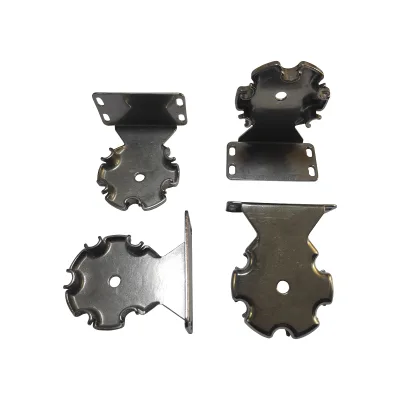
The current market listings reveal a diverse range of structural hardware, including single-side brackets, triangle brackets, and hexagonal head bolts, which serve as potential candidates for wind turbine mounting systems. These products often originate from manufacturing hubs in Taiwan and mainland China, with specific model numbers like WD-002 indicating standardized production runs. Buyers must carefully cross-reference these general hardware descriptions against the specific mechanical demands of wind turbine towers and nacelles to ensure the listed items are not merely generic construction fasteners.
Listing signals such as "OEM/ODM" services and customizable standards suggest that suppliers are capable of adapting their production lines to meet unique project specifications. The observed data points to a wide range of lead times, from 10 to 50 days, and varying minimum order quantities, which indicates a flexible but potentially fragmented supply chain. Procurement teams should scrutinize the "Single-Side Bracket" and "Triangle Bracket" designations to confirm they align with the specific geometric and load-bearing requirements of the intended wind turbine installation.
Technical Specifications to Verify
Technical verification must focus on the material composition and tolerance grades, as the supplied data highlights aluminum alloys like A380 and stainless steel as primary construction materials. Buyers need to confirm that the casting tolerance, often cited as CT4-6 for aluminum die-casting, meets the precise alignment requirements of wind turbine mounting interfaces. The presence of CNC machining and cold chamber die casting processes suggests high precision, but the specific tolerance of +/-0.01mm must be validated against the engineering drawings of the turbine model being installed.
Surface preparation and treatment methods are equally critical, with options including polishing, brushing, anodizing, and powder coating observed in the market data. These treatments are essential for protecting the bracket from the harsh environmental conditions found at wind farm sites, including salt spray and extreme temperature fluctuations. Procurement teams should request detailed specifications on the thickness of these coatings and the specific alloy grades used, ensuring they match the durability standards required for long-term outdoor operation in variable weather conditions.
Compliance and Safety Documentation
Compliance verification is paramount, as the term "CE certified" implies adherence to specific European safety and environmental directives that must be explicitly documented for wind energy applications. While some listings mention ISO 9001 and RoHS certifications, these are general quality and environmental standards that do not automatically equate to CE marking for structural wind turbine components. Buyers must demand specific CE test reports that validate the bracket's performance under wind load, seismic activity, and fatigue cycling as defined by relevant European standards.
The observed data includes references to ASME, EN, and GB standards, which provides a starting point for compliance checks but requires careful interpretation. EN standards are particularly relevant for CE certification, yet the specific standard number must be identified to ensure the product meets the exact regulatory framework of the target market. Procurement teams should verify that the supplier can provide a Declaration of Conformity that explicitly links the product to the applicable wind energy safety directives, rather than relying on generic certification claims found in general hardware listings.
Cost Drivers and Commercial Terms
Cost drivers in this sector are heavily influenced by the choice of material, with aluminum alloys and stainless steel commanding different price points based on market volatility and processing complexity. The observed lead times of 30 to 50 days for die-casting housing parts suggest that production scheduling and raw material availability are significant factors in the final pricing structure. Buyers should anticipate that customizing the bracket design or requiring specific surface treatments will increase the unit cost and extend the delivery timeline beyond standard off-the-shelf options.
Commercial terms must account for the variability in minimum order quantities, which range from single items to thousands of units, affecting the per-unit economics of the purchase. The data indicates a wide price range, necessitating a detailed request for quotation that breaks down costs for tooling, material, machining, and surface treatment separately. Procurement teams should negotiate clear terms regarding payment schedules and penalties for delays, given the critical nature of these components in the overall wind turbine assembly schedule.
Supplier Qualification and Quality Control
Supplier qualification should prioritize manufacturers with proven experience in die-casting and forging processes, as the data highlights cold and hot forging alongside die-casting as key manufacturing methods. The presence of ISO 9001 and TS 16949 certifications in the observed listings indicates a baseline commitment to quality management systems, which is essential for producing reliable structural hardware. However, buyers must verify that these certifications are current and specifically cover the production of wind energy components, not just general industrial hardware.
Quality control protocols must be rigorous, with the observed "100% Inspection Before Shipping" serving as a minimum requirement rather than a guarantee of performance. Procurement teams should request detailed inspection reports that include non-destructive testing results and dimensional verification data for every batch produced. The ability to perform 100% QC steps is a strong indicator of supplier capability, but it must be complemented by a robust audit process to ensure that the inspection methods align with the specific safety and performance standards of the wind turbine industry.
Long-Term Procurement Checks
Long-term procurement strategies must include regular audits of the supplier's manufacturing capabilities and quality control systems to ensure consistent performance over the lifespan of the wind farm project. The observed lead times and production methods suggest that maintaining a stable supply chain requires close collaboration with the supplier to manage inventory and production schedules effectively. Buyers should establish a framework for periodic reviews of the supplier's adherence to standards and their ability to scale production in response to project expansion or maintenance needs.
Continuous monitoring of material quality and surface treatment durability is essential to prevent premature failure of the wind turbine brackets in the field. Procurement teams should implement a feedback loop that tracks the performance of installed brackets and uses this data to refine future specifications and supplier selection criteria. By maintaining a proactive approach to supplier management and quality assurance, buyers can mitigate risks associated with supply chain disruptions and ensure the long-term reliability of their wind energy infrastructure.
FAQs
Can I customize the wind turbine bracket design?
Yes, customization is available for these brackets. The supplier offers OEM and ODM services to meet specific project requirements. You can request modifications to the structure, such as single-side or triangle brackets, to ensure the component fits your unique installation needs and structural specifications.
What materials are used for these brackets?
These brackets are manufactured using stainless steel and aluminum alloys. Specific casting materials include A380 aluminum, ZL101, A356, and ADC12. The choice of material depends on the required strength, corrosion resistance, and weight constraints for your specific wind turbine application or hardware mounting needs.
What certifications do these brackets hold?
The products hold ISO 9001, RoHS, and CE certifications. Additional quality standards include SGS and TS 16949. These certifications ensure that the manufacturing processes and final products meet international quality and safety standards, providing assurance for industrial and environmental applications requiring certified hardware components.
What is the lead time for production?
The typical lead time ranges from 30 to 50 days. For specific A380 aluminum die casting housing parts, the lead time is approximately 45 days. This timeframe accounts for the manufacturing processes, including die casting, CNC machining, and surface treatments like anodizing or powder coating.
How is the quality of these brackets inspected?
Quality is ensured through 100% inspection before shipping. The supplier performs strict QC steps to verify dimensions and surface quality. The casting tolerance is maintained at CT4-6 for aluminum parts, and machining tolerance is kept within +/-0.01mm, ensuring high precision for critical hardware installations.
What surface treatments are available for these brackets?
Available surface treatments include anodizing, painting, powder coating, and brushing. These options enhance corrosion resistance and aesthetic appeal. The surface preparation involves polishing to achieve the desired quality level, ensuring the brackets withstand environmental conditions while maintaining structural integrity for wall or machinery mounting applications.